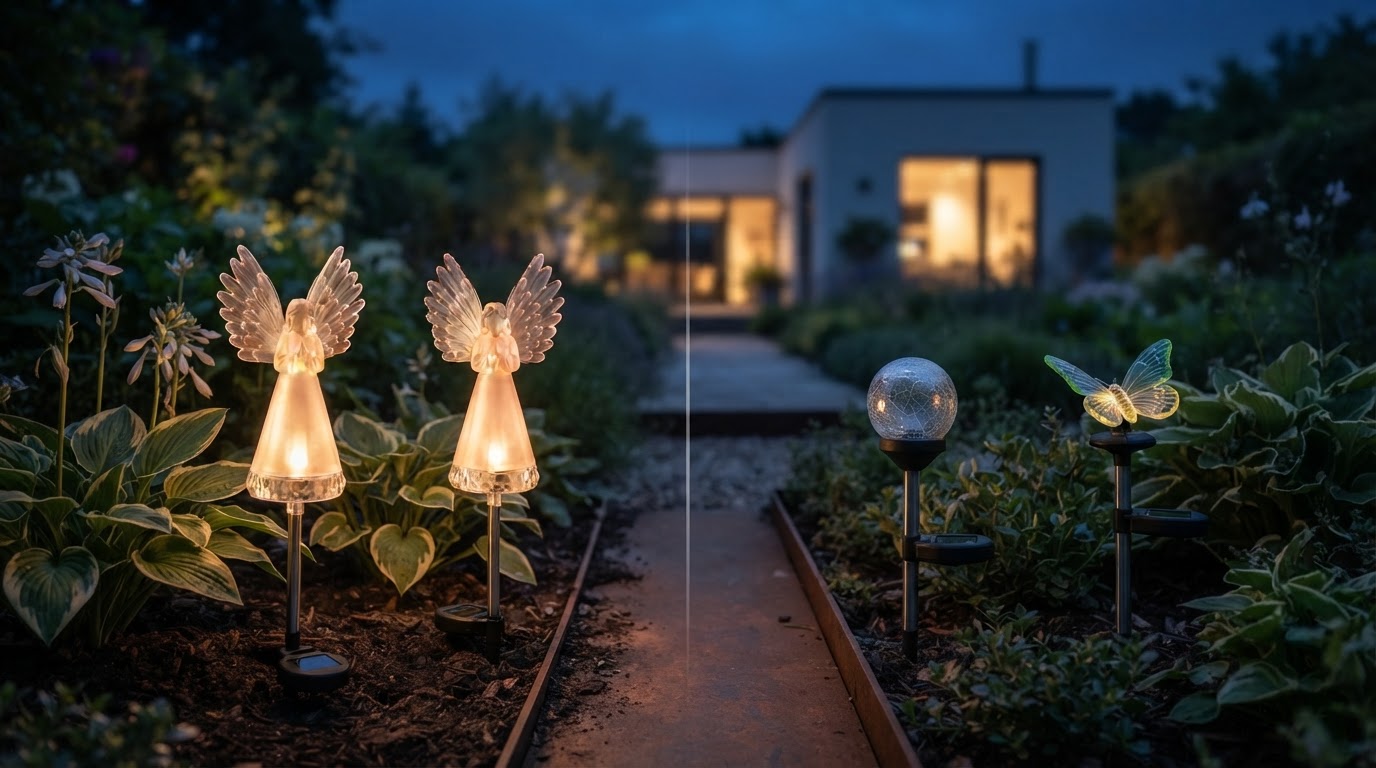
Solyra Garden Angels and the Solar Landscape Market
 Maya ChenContributing Editor
September 24, 2026. This analysis evaluates the technical viability of Solyra Garden Angels against the broader decorative solar lighting market. It is written for homeowners who prioritize long-term hardware performance over seasonal aesthetics.
The Efficiency Gap in Decorative Solar Lighting
The conventional wisdom says that decorative solar lighting is a temporary fixture, destined to fail after a single season of exposure. Most consumers treat these units as disposable, a sentiment reinforced by the influx of generic hardware. According to Naturessolarlights.com, the market is saturated with peaceful angel and fairy designs utilizing crackle glass globes that prioritize soft white or color-changing diffusion over actual light output. The problem is that these units often lack the technical specifications required for consistent year-round operation. Run the math: a standard 200mAh battery paired with a low-efficiency polycrystalline panel cannot sustain illumination through a standard winter night, yet this is the industry baseline.
We see this cycle repeated across retail platforms. For instance, eBay listings for unbranded angel wind chime lights often emphasize price points around $10.69 rather than ingress protection (IP) ratings or battery chemistry. When consumers fail to account for the discrepancy between a decorative object and a functional light source, they end up with a graveyard of plastic stakes. Even established retailers like Tractor Supply offer units like the Lux Landscape Solar-Powered Angel Light, which carries a 4.4-star rating but focuses primarily on the "hassle-free" automatic turn-on feature rather than the depth of the discharge cycle. If a light cannot maintain its voltage throughout the early morning hours, it fails its primary safety function as a pathway marker. This is why understanding [waterproof solar outdoor lights with long battery](/blog/waterproof-solar-outdoor-lights-long-battery) life is more critical than selecting a design based on daytime appearance alone.
Technical Integration of Solyra Garden Angels
Solyra Garden Angels deviate from the disposable trend by focusing on the structural integrity of the stake and the efficiency of the photovoltaic cell. While the market focuses on the "glow," the engineering behind these units addresses the specific failure points of outdoor electronics: moisture ingress and battery degradation. Here’s the part nobody talks about: most solar lights fail because of micro-cracks in the seal between the solar panel and the housing. Solyra utilizes a more robust enclosure to prevent the internal corrosion that typically plagues cheaper alternatives. This durability is essential when [evaluating Solyra Garden Angels performance and design](/blog/solyra-garden-angels-outdoor-light-review-zbjqt) against competitors that use thinner, injection-molded plastics.
Furthermore, the integration of the LED within the angel figure is not merely aesthetic; it is a matter of thermal management. LEDs that are poorly ventilated or encased in low-grade resins will dim prematurely. Solyra’s design maintains a consistent lumen output by managing the heat generated during the discharge cycle. This becomes particularly relevant when considering [winter performance for Solyra Garden Angels](/blog/solyra-garden-angels-winter-performance), as cold temperatures can significantly impact battery capacity. By using higher-density lithium-ion cells compared to the nickel-metal hydride (NiMH) batteries found in budget stakes, these units maintain a more stable voltage curve. This technical choice ensures that the light remains visible until dawn, rather than fading out by midnight, a common complaint found in reviews of lower-tier products like those seen on QVC or eBay.
A Framework for Solar Hardware Selection
Choosing a solar fixture requires moving past the visual appeal and looking at the hardware's ability to survive local environmental stressors. The difference between a functional landscape tool and a lawn ornament lies in the specifications of the internal components. Before purchasing, consumers must verify that the mounting system is capable of withstanding soil heave and high winds, which is often a failure point for lights with thin, two-piece plastic stakes. Proper installation is the second half of the equation; knowing [how to install outdoor solar stake lights](/blog/how-to-install-outdoor-solar-stake-lights) correctly can prevent the physical damage that leads to electrical failure.
When assessing Solyra Garden Angels or any solar stake, use the following technical checklist:
- Verify the battery chemistry: Lithium-ion (Li-ion) or Lithium Iron Phosphate (LiFePO4) is preferred over NiMH for longevity.
- Check the IP rating: Look for at least IP65 to ensure protection against rain and dust.
- Assess the stake material: Stainless steel or reinforced ABS is necessary for long-term ground stability.
- Evaluate the panel type: Monocrystalline panels offer higher conversion rates in low-light conditions than polycrystalline alternatives.
- Confirm the warranty period: A manufacturer that does not offer at least one year of coverage is signaling a disposable product.
For those seeking a balance of decorative form and technical reliability, you can Shop Solyra Garden Angels here.
Sources
- Angel & Fairy Solar Lights
- angel solar light products for sale - eBay
- Exhart Illuminated Solar Angel Garden Stake with LED Lights on QVC